If you have a small pantry and you’re shopping for airtight containers, you’ve probably already seen articles claiming “glass is better” — or the opposite. The right question isn’t glass or plastic — it’s what job you need the container to do, how heavy it gets once it’s full, and whether you’re paying for the material or for the seal system. Answer that first, and the rest decides itself.
The decision sequence: job → seal/opening → shape/space → weight → material.
What “airtight” actually requires
A container isn’t airtight because the lid “fits well.” It’s airtight because of its sealing system — most commonly a gasket combined with a compression or latching mechanism that presses that gasket against the base, though the exact design varies by brand and product line. This matters because it contradicts the most common assumption: that glass is automatically airtight and plastic isn’t.
America’s Test Kitchen, which puts these products through real lab testing (shaking with dyed water, controlled drops ranging from 1.5 to 2.5 feet / roughly 46-75 cm depending on the review, 100 repeated open/close cycles, freezing), confirms this from both directions: its plastic winner, the Rubbermaid Brilliance set (Tritan, with a gasket and latch), had a seal “so tight that no drops of water escaped” when shaken hard — while a glass set from Joseph Joseph failed the same shake test: “water leaked when we shook them.” Material doesn’t determine the seal; the sealing system and construction do.
The decision framework, in four questions
1. Is this for dry pantry storage only, or will the same container also go into the fridge, freezer, microwave, or oven?
Dry pantry only → the seal system matters more than the material. Moves between fridge/freezer/microwave/oven → that’s where glass starts earning its price, because one container replaces several jobs (storing, reheating, serving).
2. Are you scooping it out, pouring it, or just storing and refilling occasionally?
Frequent scooping/pouring (rice, flour, cereal, sugar) → prioritize a wide opening and a shape that makes it easy to get product out, not just the seal.
Occasional storing and refilling → the seal and stacking footprint matter more than opening shape.
3. Does weight matter in your kitchen — high shelves, kids helping, frequently refilling large bags of flour/rice?
If yes → plastic has a real structural advantage: it’s lighter and more impact-resistant. Rubbermaid describes its Brilliance plastic line as BPA-free Tritan, shatter-resistant — built exactly for this scenario.
If no → glass’s weight stops being a relevant downside.
4. Are you paying for the material, or for a better seal, shape, and lid system?
This is the question most people skip. A glass container with a mediocre lid can be worse than a well-designed plastic one. Evaluate the whole system — opening, gasket/latch, stacking footprint, lid usability — not just the material.
Where plastic wins — and a real warning almost no pantry roundup mentions
Push-button systems like OXO Good Grips POP are explicitly described by the manufacturer as designed for dry storage, with a button-activated lid that creates the airtight seal — the most commonly cited reference point in this category. But America’s Test Kitchen’s review dedicated specifically to dry/pantry storage containers (not fridge storage) found a real problem that no generic guide tests for: in its drop test, the OXO POP’s lid popped off every single time, and its tall, narrow shape made scooping with measuring cups difficult. The actual winners of that specific test were the Cambro CamSquares Classic (polypropylene, ~$26 — its humidity-indicator pebble stayed dry through 10 days in ATK’s seal test) and the Progressive ProKeeper+ (~$57 for a set of 2), the only container of all those tested that stayed sealed after being dropped from 1.5 feet (about 46 cm) — neither one shows up in the generic “best containers” lists that dominate this category’s search results.
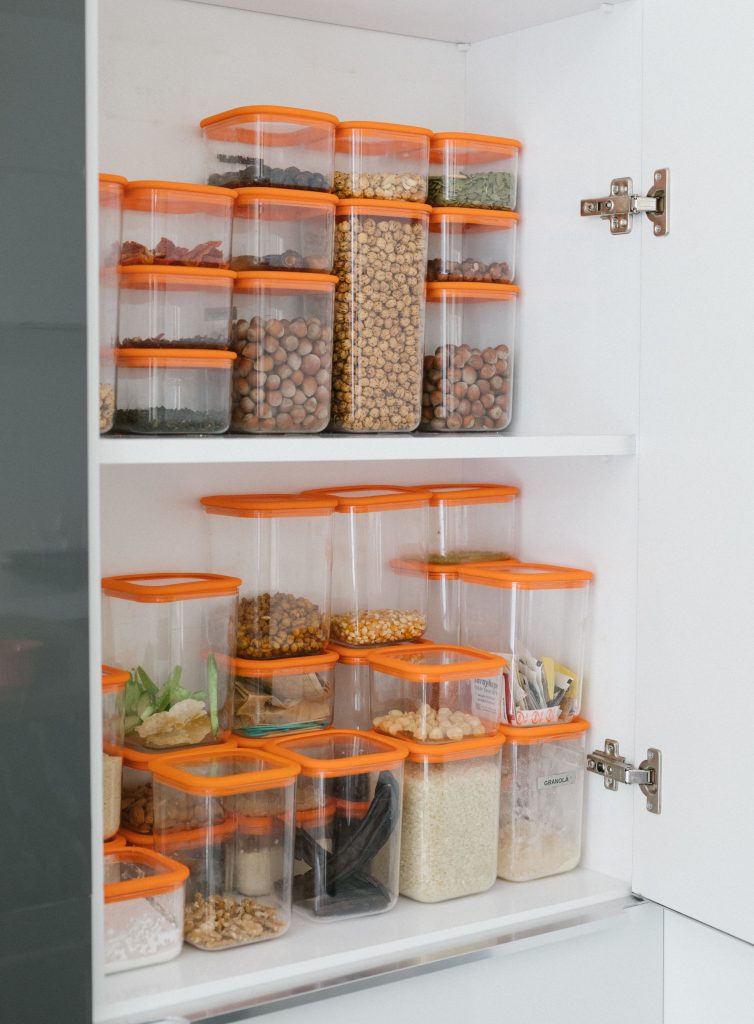
“In America’s Test Kitchen’s drop test, the OXO POP’s lid popped off every single time.”
“America’s Test Kitchen”
The real warning about cheap plastic: in America’s Test Kitchen’s testing, the Rubbermaid EasyFindLids “shattered after being dropped from just 2 feet in the air, and the press-down lid leaked” — and both the lids and containers retained odors even after washing. If you’re storing spices, garlic powder, ground coffee, or you simply live with kids who drop things, this specific cheap plastic is a bad idea, no matter what the box says.
There’s a second lesson in America’s Test Kitchen’s testing that matters more than glass vs. plastic: the same Rubbermaid Brilliance plastic set that was the outright winner of ATK’s general plastic-container test (that “no drops escaped” seal) ran into a real problem in ATK’s dry-storage-specific test — “the lid popped off when knocked over, and flour spilled,” because of its narrow opening. Winning “best food storage container” and winning “best pantry container” are not the same test, even for the exact same product line. That’s the real reason to shop by job, not by a general-purpose “winner” label.
Who should stick with good, drop-tested plastic (Cambro CamSquares, Progressive ProKeeper+, or Rubbermaid Brilliance’s plastic version): households with young kids or a high risk of drops, anyone who prioritizes light weight, a tight budget, and anyone storing mostly dry, low-odor foods — though the same Rubbermaid Brilliance that seals best against liquids is one to watch for spills if it gets knocked over on a pantry shelf.
Where glass wins — and where it doesn’t
Well-designed glass (Pyrex Snapware, Rubbermaid Brilliance’s glass version) resists staining in a way some plastics don’t — though odor retention turned out to be less about material than about specific product design: America’s Test Kitchen’s winning glass set performed well on odor, while other glass containers in the very same test, including an OXO glass line, still retained faint odors after washing. Glass’s clearest, best-supported advantage isn’t a chemistry claim — it’s manufacturer-rated capability: the manufacturer specifies that Rubbermaid Brilliance glass bases are oven-safe up to 450°F, and both that line and OXO Smart Seal are designed for fridge, freezer, and microwave use within their instructions. That versatility is what justifies the higher price, when the same container replaces several jobs (storing, reheating, serving).
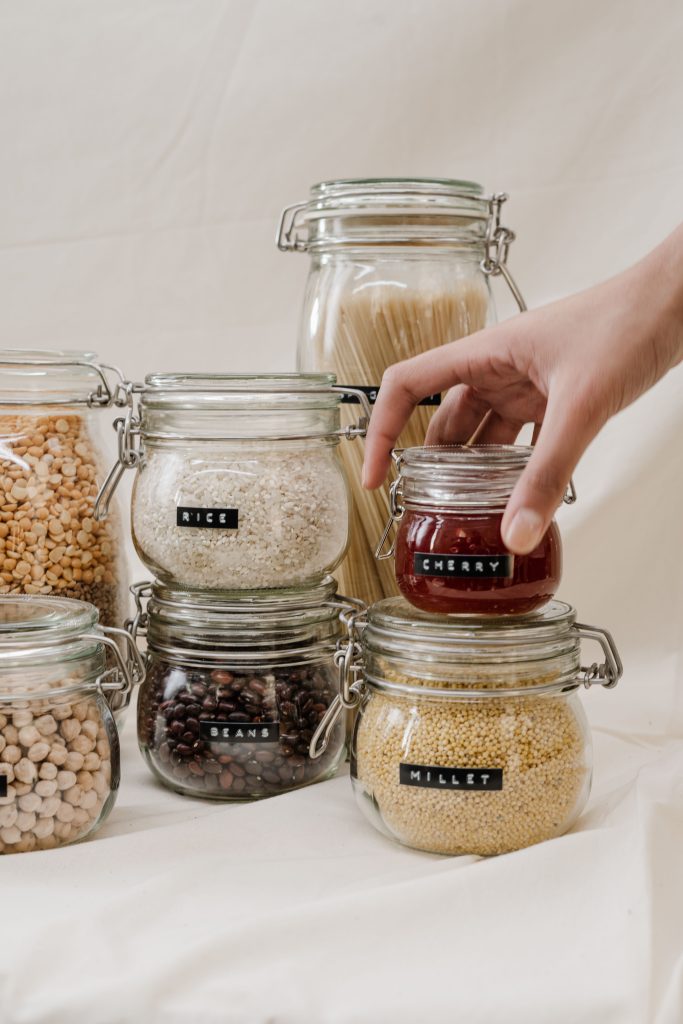
“The manufacturer specifies that Rubbermaid Brilliance glass bases are oven-safe up to 450°F — the versatility that justifies the higher price.”
“Rubbermaid”
Consumer Reports, in its most recent testing round, excluded plastic from its top recommendations over the risk of plastic compounds migrating into fatty, acidic, or alkaline foods — a concern the organization says is heightened by heat exposure such as microwaving. That said, the FDA currently maintains that BPA specifically “is safe at the levels present in foods,” and most serious brands have already eliminated it anyway. The honest takeaway isn’t that plastic is inherently unsafe or that glass is inherently healthier — it’s to use each product as intended and per the manufacturer’s instructions, without turning a material preference into a medical claim.
Not all glass is a good investment either: Caraway containers, averaging $40 per piece — well above the typical $7-15 range for other glass brands — break if dropped, just like any glass. Whether cheaper glass performs equivalently to premium glass is a comparison we could not verify against a Tier-1 source in this audit — treat that specific claim as unconfirmed rather than established.
Who should pay more for glass: anyone storing spices, coffee, tea, or other strong aromatics; anyone putting food directly into the oven or microwave from the container; anyone with a genuine concern about chemical migration into fatty/acidic food; anyone who wants one container to store, reheat, and serve.
Quick decision table
| Situation | Better fit | Why | What to verify |
|---|---|---|---|
| Bulk flour, rice, cereal in the pantry | Plastic | Lighter, impact-resistant, modular formats | Seal, opening width, shelf dimensions |
| High shelf / frequent lifting | Plastic | Lower handling weight | Capacity when full, lid usability |
| One container for fridge + reheating + serving | Glass | Greater multi-use versatility | Exact microwave, oven, and freezer instructions |
| Strong aromatics or acidic/fatty foods | Glass | Material matters more than category | Manufacturer materials and care instructions |
| Permanent dry pantry storage | Either | Seal + stacking footprint dominate | Airtight mechanism, dimensions, stackability |
| Kids with pantry access | Plastic, almost always | Drop resistance, lower weight | Age-appropriate handling, shelf placement |
What I’d buy by use case — not by material
For a flour/sugar/rice pantry system: I’d prioritize a wide opening, a reliable seal, a rectangular footprint, and low empty weight before paying extra for glass — specifically Cambro CamSquares or Progressive ProKeeper+ over OXO POP, given the actual drop-test finding.
For leftovers and ingredients that move between fridge, freezer, microwave, and table: glass earns its keep because its multi-use capability can replace several separate containers.
For a small, mixed kitchen: I wouldn’t force one material across the whole kitchen. A rational system can use lightweight plastic for bulk dry pantry storage and glass for smaller multi-use food-storage tasks.
Before you buy anything: a 5-minute pantry audit
Don’t start on a shopping page. Start in your kitchen. Write down:
- What are the 5-10 foods you actually want containers for?
- How much of each do you normally buy?
- Where will each container sit?
- Do you scoop it, pour it, or just store it?
- Will that container ever leave the pantry?
Then measure your shelves. Only after that should you compare products. This reverses the usual shopping order — instead of product → convince yourself you need it, you get problem → constraints → container type → product, which is far more likely to leave you with a pantry that actually works instead of a matching set that doesn’t fit half your shelf.
FAQ
Is BPA a real concern today?
Most serious brands (OXO, Rubbermaid) are already BPA-free, and the FDA currently maintains that BPA is safe at the levels present in food. Consumer Reports’ concern isn’t BPA specifically — it’s migration of other plastic compounds into fatty, acidic, or alkaline foods, which matters more for the fridge than for dry pantry storage.
Why can a “winning” container in one test fail in another?
Because “best food storage container” and “best pantry container” aren’t the same question, even though most guides treat them as if they were. Rubbermaid Brilliance’s plastic set is the proven seal-test winner against liquids; the same narrow opening that makes it good for that makes it prone to spilling if knocked over on a dry-storage pantry shelf.
Are these dishwasher safe?
Dishwasher compatibility varies by product. Check the manufacturer’s care instructions, especially for lids and seals.
Bottom line
No material wins universally. Good, drop-tested plastic (Cambro CamSquares, Progressive ProKeeper+, Rubbermaid Brilliance’s plastic version) is the more rational choice for bulk dry pantry storage — lighter, more durable, and lab testing shows that doesn’t always match the brand most recommended in generic lists (OXO POP itself fails the drop test). Glass earns its higher price when the same container replaces several jobs — fridge, microwave, oven — or when you’re storing aromatics and sensitive foods. The strongest system for a small kitchen is probably hybrid, not ideological: use the material that fits the job, not one material trying to do everything.
Sources
- America’s Test Kitchen — The Best Dry Storage Containers of 2026
- America’s Test Kitchen — The Best Plastic Food Storage Containers of 2026
- America’s Test Kitchen — The Best Glass Food Storage Containers of 2026
- FDA — Bisphenol A (BPA): Use in Food Contact Application
- Consumer Reports — Best Food Storage Containers of the Year