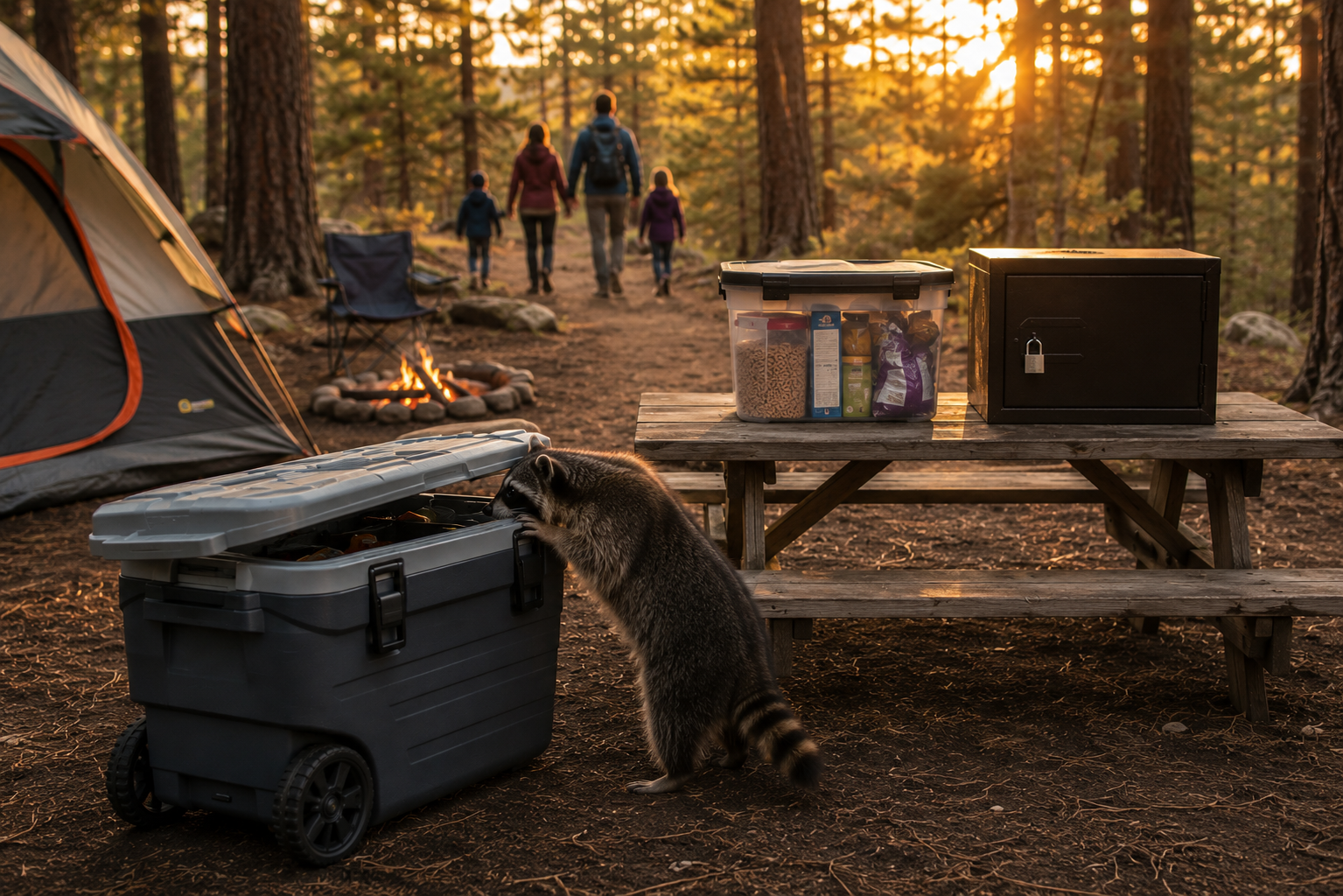
Imagine a family arriving at a campground with a $425 wheeled cooler, airtight snack containers, and odor-control bags — and they could still end up violating the campground’s storage rule, or with wildlife getting into improperly stored food. Not because the gear was bad. Because food storage was never one problem — it’s several, and they don’t share a container.
Raw chicken has a different job than a bag of pretzels. Pretzels have a different job than tomorrow night’s dinner. Drinks your kids reach for all afternoon create a different problem than perishables you won’t touch until tomorrow. And once everyone leaves the campsite for a hike, the correct place for all of it may change again.
Buying the “best” camping cooler does not automatically give you the best food-storage system. Neither does buying a set of airtight containers.The Quick Decision Map
| What you’re storing | First question | Likely solution | What can change the answer |
|---|---|---|---|
| Raw meat, dairy, prepared perishables | Must it stay cold? | Cooler | Temperature + trip duration |
| Drinks and frequently used snacks | Will the family open it constantly? | Easy-access storage or a second cooler | Trip length + available space |
| Bread, cereal, coffee, packaged foods | Does it need refrigeration? | Camp pantry / dry storage | Organization + wildlife rules |
| Leftovers | Still perishable? | Sealed container inside cold storage | Temperature |
| Toiletries and other scented items | Does the destination regulate them as attractants? | Store according to local rule | Destination |
| Everything, once camp is unattended | What does this location require? | Vehicle, locker, or compliant storage | The local rule |
Food storage is a collection of jobs, not a category of containers. Some destinations regulate more than just groceries. We’ll get to that.
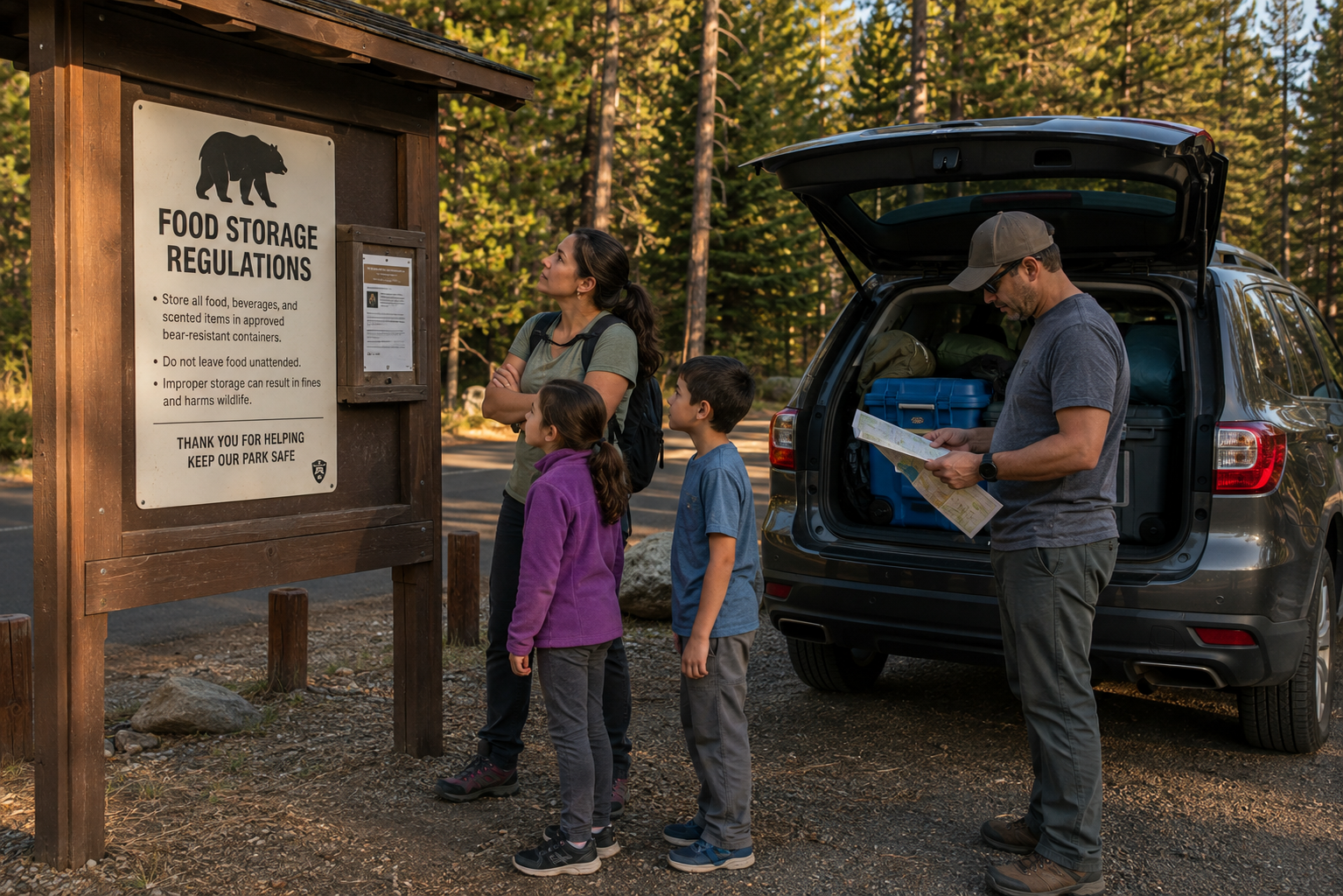
START WITH THE TRIP, NOT THE CONTAINER
Answer these before you buy anything:
- How many people, how many days?
- How much of what you’re carrying is actually perishable?
- Does the campground provide a food locker?
- Once wildlife storage enters the picture — what does the land manager require?
That last question should be answered before buying anything wildlife-specific. Rules can vary by park and even by area or campground — a storage method that satisfies one destination shouldn’t be assumed to satisfy another.
DIVIDE THE FOOD BY JOB
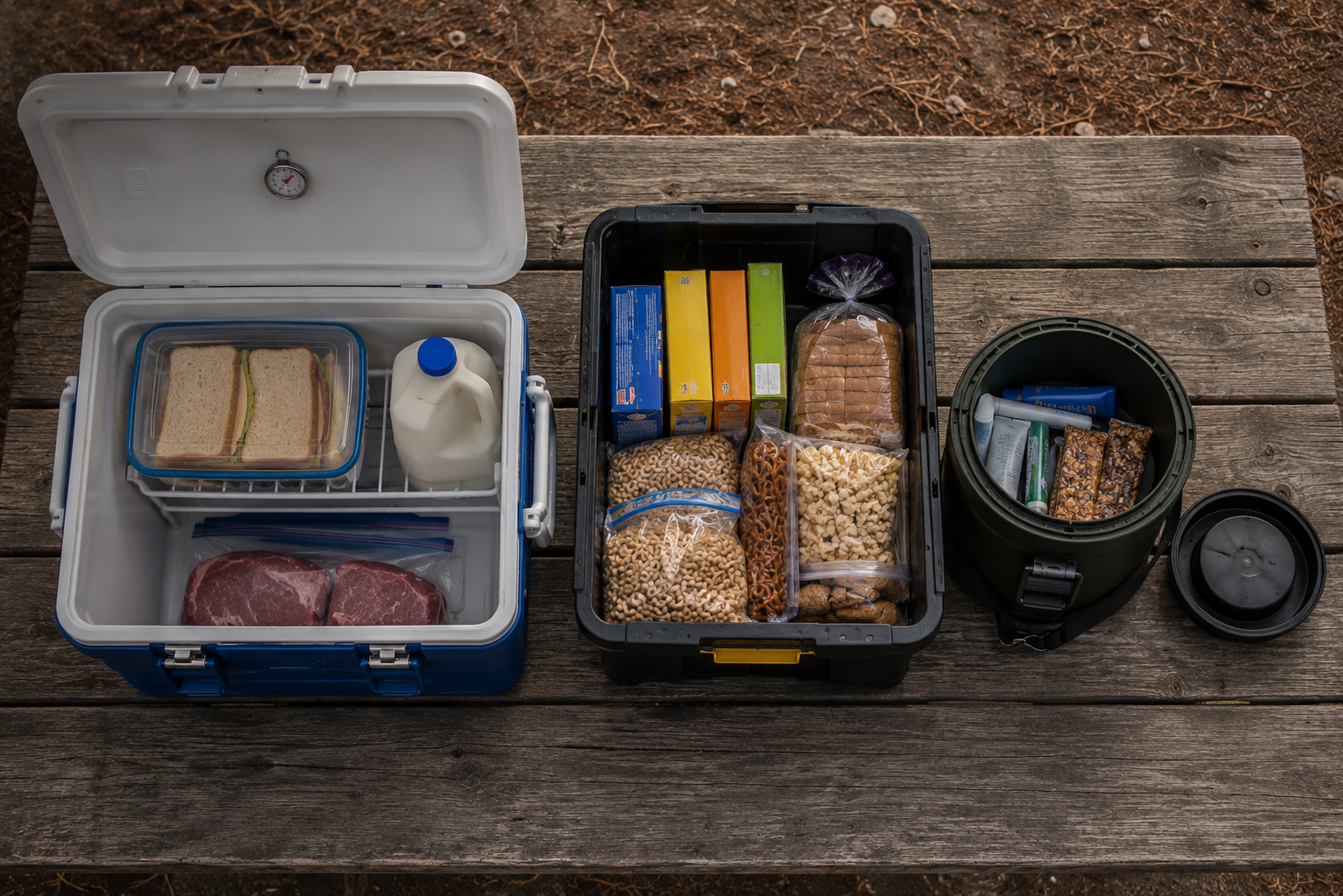
Everything you’re bringing falls into one of three systems — and they don’t share a container.
Cold
Raw meat, dairy, leftovers
Needs temperature control.
Dry / Access
Cereal, bread, snacks
Needs organization and easy access.
Wildlife / Compliance
Anything scented — food or not
Governed by the local rule once the site is unattended.
That third category is bigger than food — and most families never plan for it.
TEMPERATURE: THE COOLER’S REAL JOB
A cooler’s first job isn’t holding ice for an impressive number of days — it’s keeping perishable food safe.
USDA “Danger Zone” rule:
With a single cooler, raw meat goes below ready-to-eat food, not above it.
FoodSafety.gov recommends keeping an actual thermometer in the cooler. Ice remaining in the cooler is not itself a food-temperature measurement — check the temperature.
BUILD THE DRY CAMP PANTRY
Dry food doesn’t need to eat into cold-storage volume, and its failure modes are different: crushing, spills, disorganization — not spoilage. The job here is organization, transport, and access.
Rigid Gear Box
For a family hauling a full camp kitchen.
Soft Bin
For one that wants to compress it flat on the way home.
What You Already Own
If your current containers already do the job — use them.
WHAT NOT TO BUY
DON’T Buy a bear-resistant cooler just because you’re camping — check what your destination actually requires first; a provided locker may already solve it.
DON’T Buy a second cooler by default — the two-cooler strategy earns its place on longer trips with constant access, not as a universal rule.
DON’T Rebuy your pantry because the trip has a tent — if your containers already do the job, use them.
DON’T Pay for certification without knowing what it solves — it doesn’t mean every campground requires it.
Sometimes the right purchase is nothing — until you’ve checked the campground.
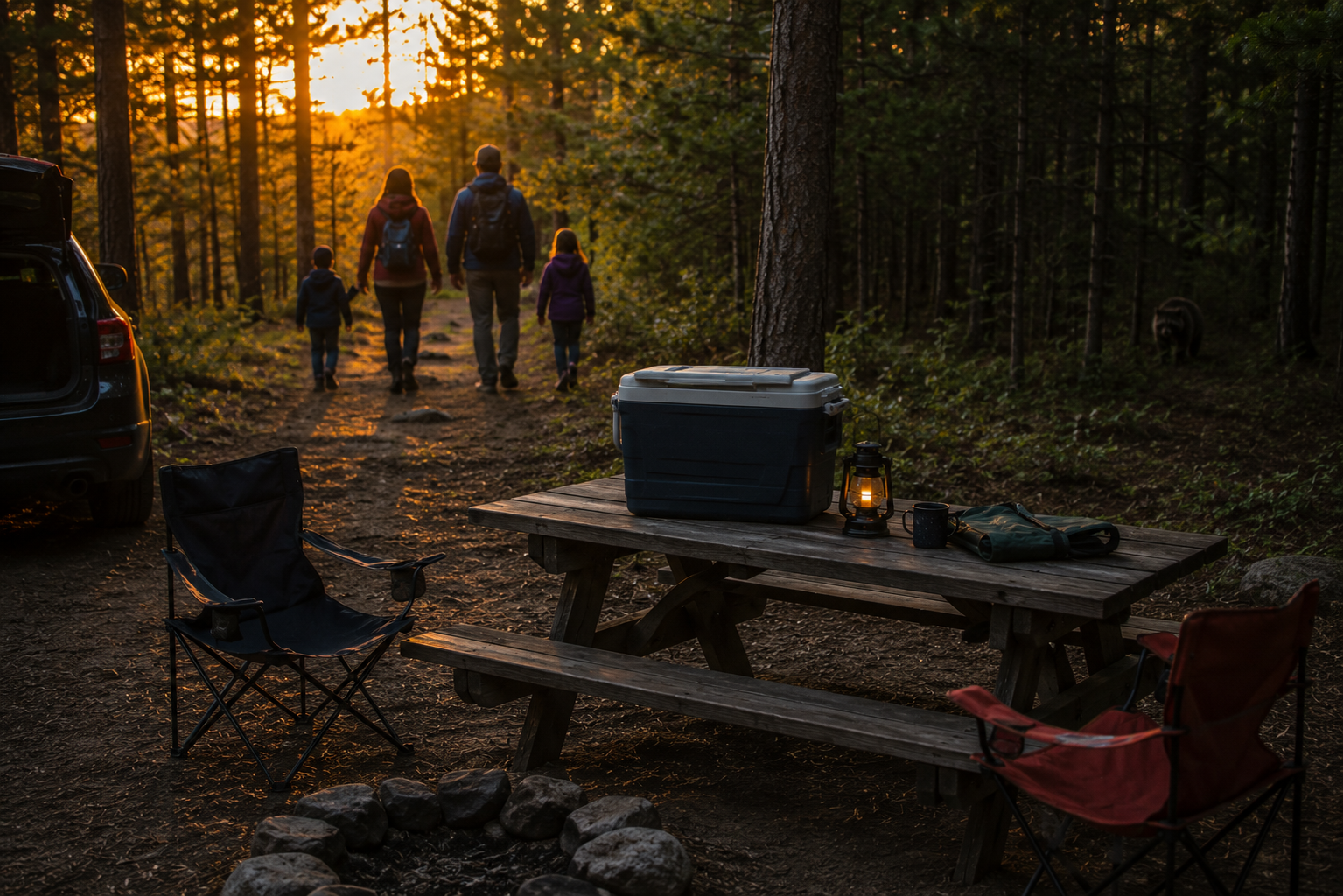
WHEN YOU WALK AWAY, RECHECK THE SYSTEM
“All coolers (even those considered ‘bear proof’ such as Yeti) must be stored away or secured when the site is unoccupied or not attended.”
The container didn’t change. The food didn’t change. The family’s location did.
The correct storage solution can still change.
A long-term field review from Outside Online found that “on its own, an Opsak is an inadequate method of overnight food protection” — the seal degrades after four to six weeks of regular use, and the exterior picks up contamination from ordinary handling. Treat an odor-proof bag as a liner inside a compliant container, never as a replacement for one.
Three Parks, Three Different Answers
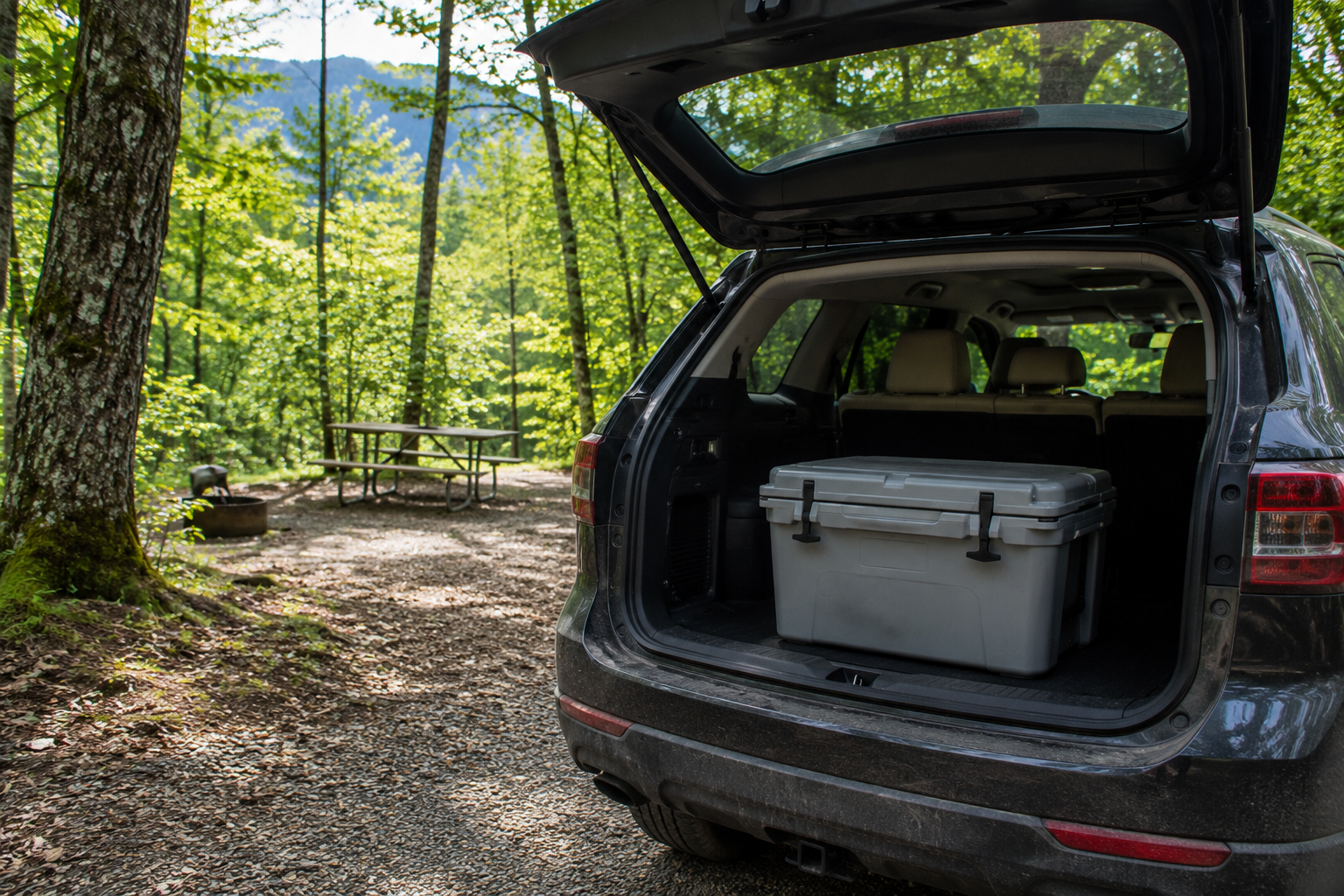
Great Smoky Mountains
Food and cooking equipment that aren’t in use must stay sealed inside a vehicle — the trunk specifically — or a solid-sided camping unit, at all times.
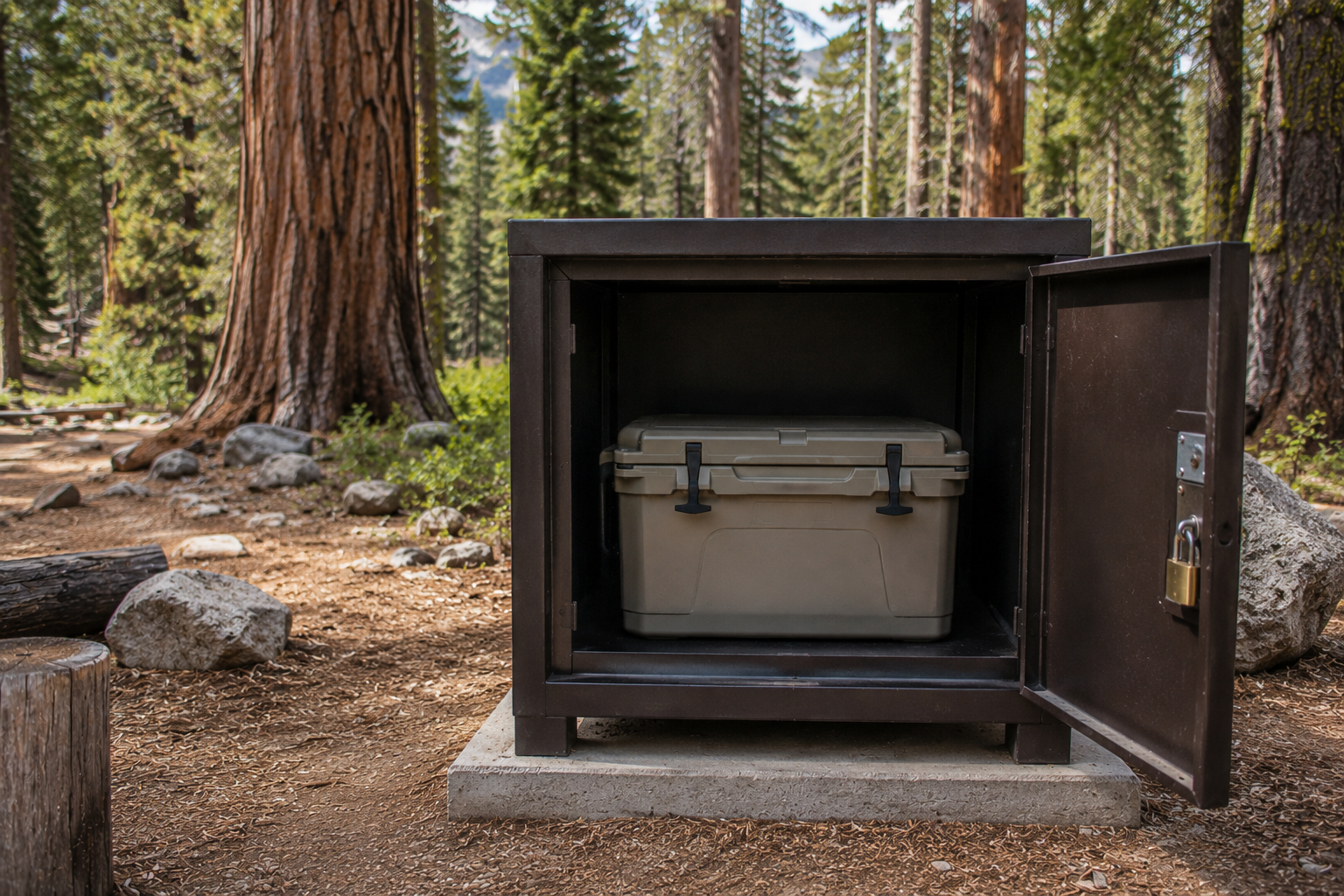
Vehicle can be part of the systemSequoia & Kings Canyon
“Always remove all food and items from your car or truck.” Approved alternatives: campground food-storage boxes, or your recreational vehicle.
Ordinary car doesn’t qualifyNorth Cascades
Ordinary coolers aren’t airtight and offer very little physical barrier to a large animal — a black bear can smell what’s escaping and simply open or knock it over.
Cooler ≠ wildlife barrierThere’s no universal rule — only the rule at the place you’re actually going.
Airtight describes a sealing characteristic, and should be backed by the product’s actual design and testing — not just the word on the label.
IGBC-certified bear-resistant means the exact model appears on IGBC’s certified-product list and is used in the required configuration.
Approved or required where you camp is decided by the land manager, and it varies by park — sometimes by campsite.
Cold-storage performance does not prove wildlife resistance. Wildlife resistance does not prove local approval.
How to Verify Certification, Not Marketing
Four different sources answer four different questions, and none substitutes for the others.
1. IGBC Testing Protocol
How is it tested? Live testing with captive grizzly bears at the Grizzly & Wolf Discovery Center (West Yellowstone, MT) and Washington State University’s Bear Research Center (Pullman, WA).
2. Bear-Resistant Products Program
What does passing mean? Certification “does NOT guarantee that a product is BEAR-PROOF,” and does not automatically approve it for every public land.
3. Certified Products List
Is this exact product certified? Tundra 45 — #3701. Tundra 65 — #3702. Roadie 48 — #245489. “An unlocked cooler is not considered bear resistant.”
4. Land Manager
Can I use it here? Certification doesn’t decide this — the specific park or forest does.
TEST → CERTIFICATION → EXACT MODEL/CONFIGURATION → LOCAL RULE. Verify the chain yourself before trusting a “bear-resistant” claim on any product page.
YOUR FOOD-STORAGE SYSTEM ISN’T JUST FOR FOOD
Once your site is unattended, what counts as “food” gets bigger — and it’s different park by park.
Grand Teton
Food and drinks (even empty containers), trash, coolers, cookware, toiletries, fuel, bug spray, sunscreen, pet food — all into a bear-resistant locker or a hard-sided vehicle, doors locked, windows closed, around the clock.
Sequoia & Kings Canyon
Everything above, plus: soap, toothpaste, cosmetics, lip balm, even air fresheners and infant car seats.
Katahdin Woods and Waters
Simple rule of thumb: anything that goes in your mouth or on your skin gets stored with your food. Coolers, in their words, “do not count as proper food storage” there.
Not every park regulates every scented item identically — but “we put away the groceries” is not automatically the end of the checklist.
The Complete Family Camping Storage System
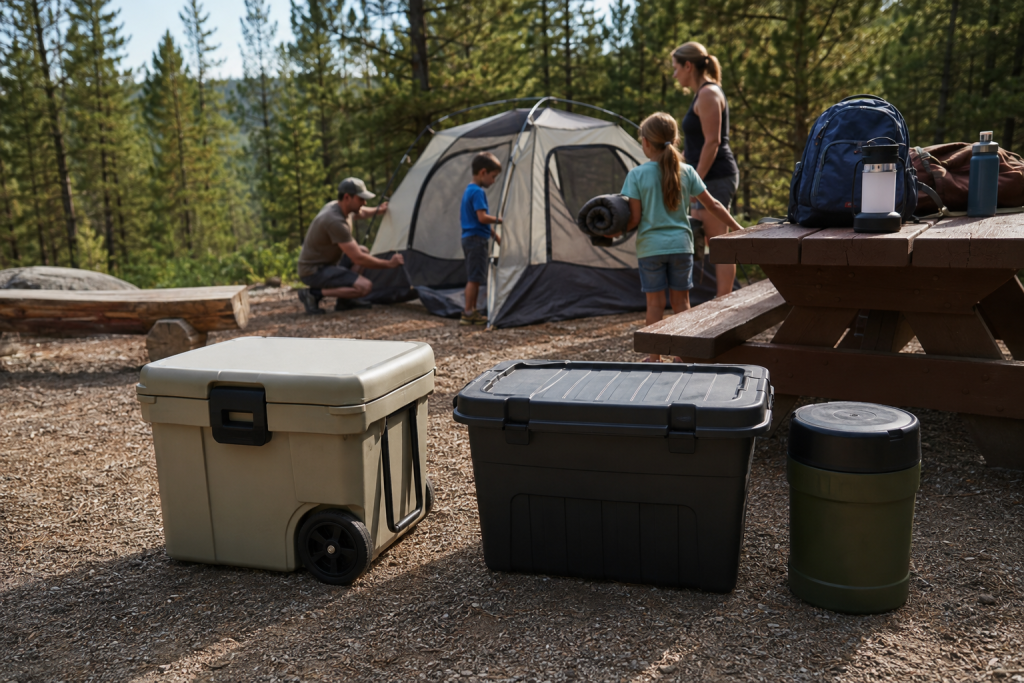
| Job | Typical solution | What decides it |
|---|---|---|
| Keep perishables cold | Cooler | Temperature |
| Frequent drinks/snacks | Access cooler or dry container | Trip length, access frequency |
| Dry food | Camp pantry / storage bin | Organization, transport |
| Individual portions | Airtight containers, reusable bags | Food type, use case |
| Unattended scented items | Vehicle, locker, or certified storage | The local wildlife rule |
| Certified bear-resistant requirement | Exact product + required configuration | IGBC list + land manager |
Who Should Buy What
Weekend family, low-risk campground
One appropriately sized cooler and a dry storage bin. Check the rule before adding anything wildlife-specific.
Cooler opened all day
Constant drink/snack access on a longer trip is exactly where a second access cooler earns its place.
Locker provided or required
Design around the locker’s dimensions and rules first — a certified cooler doesn’t replace infrastructure that’s already there.
Regular bear-country camper
A correctly configured, currently certified cooler can genuinely earn its premium. Verify the exact model against the IGBC list.
Already own good containers
Use them. A camping label isn’t a reason to rebuy the pantry.
Final Comparison
← Swipe to see the full table →
| Product | Job | Evidence | Wildlife status | Approx. price* | Best for | Skip if… |
|---|---|---|---|---|---|---|
| YETI Roadie 48 | Wheeled family transport | ATK Best Overall | IGBC #245489 — required config applies | ~$425 | Families prioritizing wheeled mobility | You don’t need the mobility/durability premium |
| YETI Tundra 45 | Compact hard cooler | ATK Best Non-Wheeled | IGBC #3701 — required config applies | ~$325 | Smaller hard-cooler use where certification has value | No bear-country requirement |
| YETI Tundra 65 | Larger hard cooler | ATK Best Large Non-Wheeled | IGBC #3702 — required config applies | ~$395–$420 | Higher-volume family food loads | You don’t need the extra capacity |
| Coleman 50QT Xtreme | Budget cold storage | ATK Best Buy | No wildlife compliance implied | ~$75 | Families solving the cold-storage job economically | Your destination requires certified storage |
*Prices checked near publication and change often — verify current pricing before buying.
FAQ
Do I need special food containers for car camping?
Do families need two coolers?
What temperature should a camping cooler stay at?
Is an airtight container bear-resistant?
Does IGBC certification mean my cooler is allowed everywhere?
Does “bear-resistant” mean bear-proof?
Can I leave food in my car at a campground?
Do toiletries really need to be stored with food?
DECISION RECAP
Make the decisions first.
SOURCES
Food Safety
Wildlife Certification
Destination Regulations
Independent Product Testing
Manufacturer Specifications