
Marcus started asking for extra soccer time when he was eight.
Not because anyone made him. Tuesday practice would end, and he simply didn’t want to stop.
So you signed him up for a second weekly session. Then the club team wanted three days a week instead of two. Winter training filled the space where basketball used to go. Eventually, a travel tournament landed on the same weekend as his cousin’s birthday.
Travel won.
Nobody ever sat you down and said, “We’re specializing now.”
Every decision, taken on its own, made sense.
Then one day you notice basketball is gone. So are most free Saturdays. A school activity conflicts with practice. Family plans increasingly move around the tournament calendar.
And you’re left wondering something you never expected to be wondering about a kid who just really loves a game:
When did this become something bigger than a favorite sport?
The Invisible Line
That line may be harder for parents to see than it sounds.
In a 2026 study of parents of youth athletes, only 35% believed their child was specialized. When researchers applied standard specialization criteria, however, 70.7% met them.
That doesn’t mean those parents were ignoring what was happening or were “in denial.” The gap may simply reflect something more basic: families and researchers don’t always mean the same thing when they use the word specialized.
And that distinction matters.
A child can love one sport more than every other sport. They can practice it more often, care about it more deeply, and have serious competitive goals without that automatically answering the specialization question.
So before deciding whether specialization is right or wrong, there’s a more basic problem to solve:
What are we actually deciding?
We’ll come back to that.
First, it helps to understand why so many families feel they need to decide at all.
The Fear Behind “Go All In”
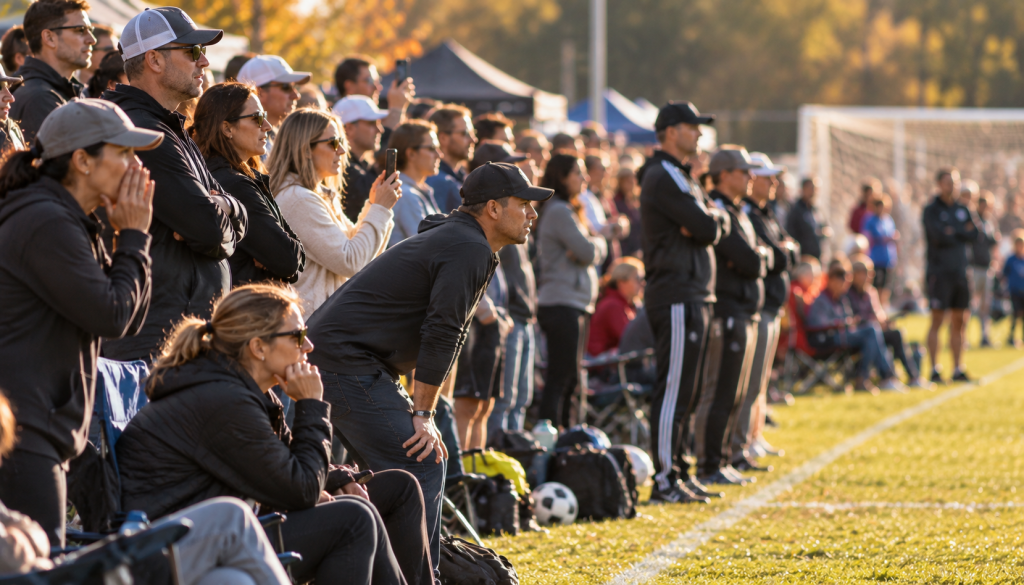
For many families, specialization isn’t really about raising a professional athlete.
The fear is much closer to home:
If my child doesn’t go all-in, will they fall behind?
In a 2025 Project Play survey of 1,848 parents, more than half reported feeling pressure to specialize their child, with helping the child make a high school team identified as a major reason behind that pressure.
That fear isn’t irrational.
Tryouts are real. Roster spots are limited. And in a youth-sports environment where another player always seems to be attending another camp, joining another travel team, hiring another coach, or training through another offseason, standing still can feel like falling behind.
“Everyone else is doing it” can start to feel like a fact rather than an assumption.
But it’s worth checking that assumption.
The American Orthopaedic Society for Sports Medicine notes that much of the intensity surrounding youth training is shaped by tradition and culture rather than clear scientific evidence that it is beneficial. It also says early specialization may decrease the likelihood of eventually reaching an elite level.
A 2022 systematic review by McLellan and colleagues points in a similar — but importantly not universal — direction.
Among studies of elite, professional, and Olympic athletes, all eight studies examining injury favored later specialization. Of nine studies examining performance, seven favored later specialization.
The evidence was largely retrospective and survey-based, the studies were heterogeneous, and the researchers did not calculate a single pooled effect.
So this isn’t proof that later is always better.
And it certainly isn’t proof that early specialization is always wrong.
It is enough to challenge a much simpler assumption:
Going all-in earlier does not automatically mean getting ahead.
Your Child May Want This Too
It would be easy to tell this story as if ambitious adults are pushing reluctant children.
The evidence doesn’t support making it that simple either.
In a survey of 974 youth club athletes, 91% believed specialization would substantially improve their skills. About 81% believed it would improve their chances of making a high school team, and 66.9% believed it would help them make a college team.
Only 45.8% believed specialization substantially increased injury risk.
At a Glance: What Young Athletes Believe
| They believe specializing will… | Share who agreed |
|---|---|
| Improve their skills | 91% |
| Help them make a high school team | ~81% |
| Help them make a college team | 66.9% |
| Meaningfully raise their injury risk | 45.8% |
Those are beliefs, not outcomes.
The study doesn’t tell us whether specialization actually produced the benefits those athletes expected, or whether their perception of injury risk was accurate.
What it does tell us is that young athletes have their own expectations about the trade.
Your child may genuinely want the extra practices, the travel team, the private lessons, and the year-round schedule.
That voice matters.
Project Play’s youth-sports guidance emphasizes asking children directly what they want from sports rather than assuming adults already know.
So enthusiasm shouldn’t be dismissed.
It should be understood.
Because before a family decides how far to follow that enthusiasm, it needs a clearer picture of what specialization actually means.
What Specialization Actually Means
Most conversations about “one sport versus multiple sports” quietly begin with the wrong question.
They count sports.
But sport specialization isn’t defined simply by whether a child plays one sport or two.
A 2021 Delphi panel of 17 multidisciplinary experts proposed defining youth sport specialization as intentional, focused participation in one sport for most of the year that restricts opportunities for participation in other sports and activities.
The important word for a family isn’t just one.
It’s restricts.
What stops happening because this sport is happening?
Maybe your daughter plays volleyball most of the year but still has room for friends, school activities, family trips, recovery, and another sport she enjoys.
Or maybe your son technically plays two sports, but baseball occupies nearly the entire calendar and the second sport survives only when baseball allows it.

Simply writing “one sport” or “two sports” on a form doesn’t capture that difference.
This definition isn’t a diagnostic test, and there is no scientifically validated score that can tell you whether your child should specialize.
It’s more useful as a way to see the trade clearly.
Which leads to the question the family in our opening never formally asked:
What had to disappear for this sport to fit?
Sometimes the honest answer is: nothing important yet.
Other times there’s already a list.
Before deciding whether that trade makes sense, work through four questions.
The Specialization Decision: Four Questions Before One Answer
These questions aren’t a medical test.
There is no score, and they don’t produce a scientifically “correct” verdict.
They’re four inputs into one family decision.
| Question | What it’s really asking |
|---|---|
| 1. Child | Who actually wants this, and why? |
| 2. Sport | What does credible evidence say about this specific sport’s pathway? |
| 3. Development | Can this child, right now, actually sustain the commitment? |
| 4. Load | What will the calendar actually require of their body and mind? |
1. Child: Who Wants This — and Why?
Start with the person actually playing.
Is your child asking for more — the way Marcus asked for extra soccer time? Or is the momentum mostly coming from a coach? A league schedule? Other families? Your own fear that your child will fall behind? Or some combination of all of them?
None of those answers automatically disqualifies the decision. A coach believing in a young athlete can be meaningful. Likewise, a parent seeing potential isn’t inherently a problem. And a child genuinely wanting more deserves to be taken seriously.
But motivation matters.
Does your child want more training because they love the sport? Or because their friends are on the team? Maybe it’s the fear of losing a spot. Or the belief that year-round training is simply what serious athletes are supposed to do?
The goal isn’t to interrogate ambition. It’s to understand what is driving it.
Ask what your child wants from the sport now, not only what adults imagine they might want from it five years from now.
2. Sport: What Does This Particular Sport Actually Demand?
This is where universal specialization rules begin to fall apart.
Johns Hopkins Medicine explicitly notes that there isn’t one universal answer and identifies gymnastics and figure skating as examples where earlier specialization can make sense because athletes may reach high levels at younger ages.
That’s one kind of sport-specific consideration.
McLellan’s 2022 systematic review found a different kind of variation. Although most performance studies in the review favored later specialization, two favored earlier specialization: marathon running and soccer.
Those findings come from different sources and answer different questions. Johns Hopkins’ gymnastics and figure-skating examples concern the developmental characteristics of particular sports. McLellan’s marathon and soccer findings came from retrospective evidence examining elite athletic pathways.
They shouldn’t be combined into one list of “sports where children should specialize early.”
At a Glance: Two Kinds of Sport Exceptions
| Source | Sports named | Kind of evidence |
|---|---|---|
| Johns Hopkins Medicine | Gymnastics, figure skating | Developmental — athletes may reach high levels at younger ages |
| McLellan et al., 2022 review | Marathon running, soccer | Retrospective — how elite athletes’ careers actually unfolded |
They show something more useful: the sport matters. A rule that makes sense for one developmental pathway may make little sense for another.
So before asking whether your child is “old enough” to specialize, ask what credible evidence actually says about the pathway in their particular sport.
3. Development: Is This Child Ready for the Commitment?
Two 13-year-olds can have completely different relationships with the same sport.
One may thrive on structured practice and competition. Another may love game day but hate year-round training. One may recover well, manage school comfortably, and still look forward to practice. Another may be exhausted, increasingly anxious about performance, or beginning to resent a schedule they once wanted.
Chronological age matters, but age alone can’t answer this question.
This isn’t about parents diagnosing physical or psychological readiness. It’s about looking at the child in front of you rather than making the decision for an imaginary future athlete.
Can they currently sustain what this commitment requires? Do they still want to?
Those questions deserve as much attention as their talent. And be cautious of anyone — including an article like this one — offering a shortcut to that judgment.
4. Load: What Will the Calendar Actually Ask of Their Body and Mind?
Now look at the calendar rather than the label.
How many months of the year is the sport organized? Practices, games, travel — how much of each? Do club and school seasons overlap? Are private sessions layered on top? And where does recovery fit in?
This is where the physical evidence becomes important.
A 2018 meta-analysis found that highly specialized youth athletes had about 1.8 times the risk of overuse musculoskeletal injury compared with athletes with low specialization.
In a separate 2020 meta-analysis involving 5,736 youth athletes, sport specializers had a 37% higher relative risk of injury than sport samplers.
Those are two different studies measuring different things. The first concerns overuse musculoskeletal injury across high versus low levels of specialization, while the second uses a broader injury measure and compares specializers with athletes who sampled multiple sports. They shouldn’t be merged into one larger injury statistic, and neither establishes that specialization itself caused every injury.
At a Glance: Two Injury Studies, Not One Number
| Study | What was compared | Finding |
|---|---|---|
| 2018 meta-analysis | High vs. low specialization | ~1.8× the risk of overuse musculoskeletal injury |
| 2020 meta-analysis (n = 5,736) | Specializers vs. samplers | 37% higher relative risk of injury overall |
But both make the same practical issue difficult to ignore: load belongs in the decision.
There is also a psychological signal worth considering, although the evidence is less clean. A 2020 meta-analysis found adolescent specializers reported higher scores across all three measured dimensions of athlete burnout. But the comparison was heavily imbalanced: the pooled data included 1,371 specializers and only 58 samplers, and only two of the eight studies had appropriately identified sampler groups.
So it would be too strong to say specialization causes burnout. The evidence is better treated as a reason to pay attention to what the commitment is asking psychologically as well as physically. A schedule designed to develop an athlete still has to fit the child living inside it.
What Are You Actually Getting for It?
After looking at the child, the sport, development, and load, turn the question around.
If your family goes all-in early, what are you expecting that decision to buy? Better skills? A starting position? Maybe a high school roster, or college recruitment? A scholarship?
There’s nothing wrong with competitive goals. But the expected payoff deserves the same scrutiny as the trade required to pursue it.
A 2021 study surveyed 1,550 former NCAA athletes. Only 18.1% reported specializing before age 15, and scholarship attainment was overall equivalent between early and later specializers.
Early specializers in that sample also reported burnout more often: 10.5% compared with 7.0%.
At a Glance: The 2021 NCAA Survey, By the Numbers
| Specialized before age 15 | 18.1% |
| Scholarship attainment, early vs. later specializers | Overall equivalent |
| Reported burnout — early specializers | 10.5% |
| Reported burnout — later specializers | 7.0% |
| Survey response rate | 17% |
There are important limitations. The study was retrospective and self-reported, and only 17% of those contacted responded. Most importantly, everyone surveyed had already reached NCAA athletics — it’s a survivor sample. The study cannot tell us what happened to young athletes who specialized early and never reached NCAA competition, and it cannot prove that delaying specialization improves the odds of earning a scholarship.
But among the former NCAA athletes actually surveyed, specializing before 15 wasn’t associated with greater scholarship attainment. That’s worth knowing before a family treats early specialization as the price of admission.
The One Decision: What Disappears?
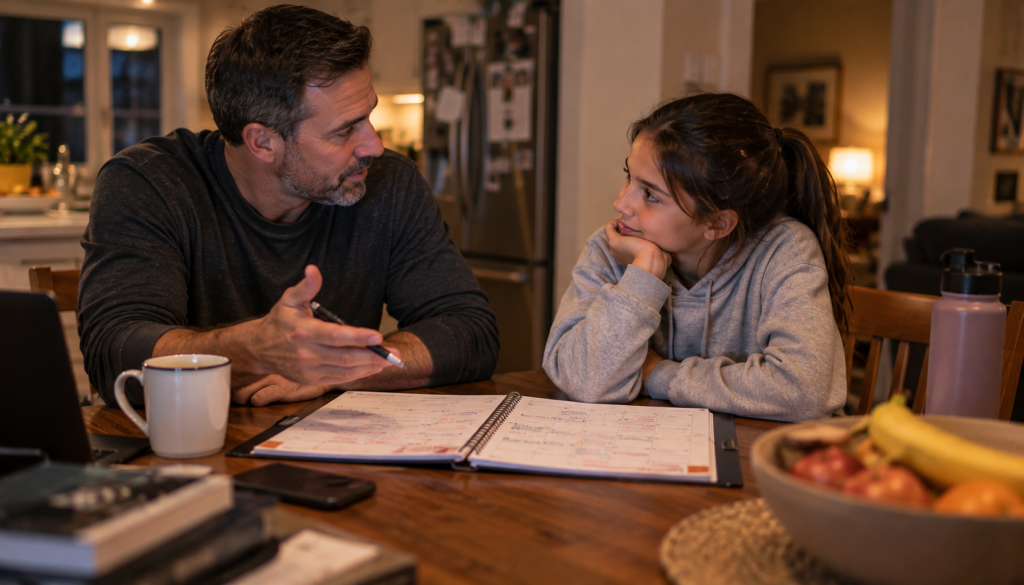
Now put everything together.
What does your child want? And what does this particular sport demand? Is this child ready for the commitment? What will the actual training load require? And what are you realistically expecting to gain?
Everything above feeds into one question:
What would your child — and your family — have to give up to make this level of commitment fit, and is what you expect to gain worth that trade right now?
Not forever. Right now. Kids change. Circumstances change. Sports change.
A “not yet” this season can become a “yes” next year. That “yes” can become “let’s pull back” without making the earlier decision a failure.
What disappears will look different in every family. Sometimes it’s another sport. Other times it’s unstructured play, a hobby, ordinary weekends, time with friends outside the team, sleep, or recovery. Still other times it’s something less visible: flexibility, family time, or the bandwidth of the adults making the schedule work. And sometimes very little meaningful has to disappear yet.
There is no scientifically correct answer to that list. That’s the point.
The decision isn’t whether sacrifice exists. It’s whether what your child may gain is worth what they — and your family — would have to give up right now.
Three Ways This Decision Can End
These aren’t scientific classifications. They’re three useful ways to describe where a family may land after working through the decision.
Sample
There isn’t a sufficiently strong reason to narrow opportunities yet.
Your child keeps trying sports, activities, positions, or seasons without needing one of them to dominate the calendar.
That isn’t a lack of commitment. It’s keeping options open while the child is still discovering what fits.
Primary + Secondary
One sport clearly matters more. It receives more practice, attention, and competitive priority — but not so much that other relevant opportunities have to disappear.
This is an editorial decision path, not a scientific category. Its usefulness is simple: priority and exclusivity are different decisions.
A child can become more serious about soccer while still playing basketball. They can prioritize volleyball without organizing the entire year around volleyball. The exact combination will look different for every family.
Yet the point isn’t that every child should choose a second sport. It’s that choosing a primary sport does not automatically require choosing an exclusive one.
Specialize
Sometimes the answers point toward deliberate specialization.
The child wants it. Both the sport and the developmental pathway make sense for this commitment. The family understands the load, and the expected benefit justifies the trade. Everyone involved understands what will become harder — or disappear — as a result.
That isn’t automatically a bad outcome.
The mistake isn’t specialization itself — it’s arriving there without realizing a decision was being made.
Back to the Kid Who Just Loves Soccer
Marcus still loves soccer as much as he did when Tuesday practice ended and he asked for more.
That was never really the question.
The question is what happens when making room for more soccer starts requiring something else to leave.
Basketball. Free Saturdays. The occasional birthday.
Maybe, at this stage, those are trades Marcus and his family understand and willingly choose. Or maybe they aren’t.
But now the decision has a name.
A favorite sport doesn’t become the right sport to specialize in just because your child loves it most. It becomes a specialization decision when making room for it starts pushing other opportunities out. The question is whether what your child may gain is worth what they — and your family — have to give up right now.
Sources
- Frontiers in Sports and Active Living (2026). Parental Perspectives on Youth Sport Specialization: Insights on Motivators Across Specialization Levels. Link.
- Aspen Institute Project Play (2025). Project Play Survey: Parents Justify Sport Specialization So Their Child Can Play in High School. Link.
- LaPrade RF, Agel J, Baker J, et al. (2016). AOSSM Early Sport Specialization Consensus Statement. Orthopaedic Journal of Sports Medicine. Link.
- McLellan M, Allahabadi S, Pandya NK (2022). Youth Sports Specialization and Its Effect on Professional, Elite, and Olympic Athlete Performance, Career Longevity, and Injury Rates: A Systematic Review. Orthopaedic Journal of Sports Medicine. Link.
- Brooks MA, Post EG, Trigsted SM, et al. (2018). Knowledge, Attitudes, and Beliefs of Youth Club Athletes Toward Sport Specialization and Sport Participation. Orthopaedic Journal of Sports Medicine. Link.
- Aspen Institute Project Play. Ask Kids What They Want. Youth Sports Playbook. Link.
- Bell DR, Snedden TR, Biese KM, et al. (2021). Consensus Definition of Sport Specialization in Youth Athletes Using a Delphi Approach. Journal of Athletic Training. Link.
- Johns Hopkins Medicine. Youth Sport Specialization. Expert Q&A. Link.
- Bell DR, Post EG, Biese K, Bay C, Valovich McLeod T (2018). Sport Specialization and Risk of Overuse Injuries: A Systematic Review With Meta-analysis. Pediatrics, 142(3). Link.
- Carder SL, Giusti NE, Vopat LM, et al. (2020). The Concept of Sport Sampling Versus Sport Specialization: Preventing Youth Athlete Injury: A Systematic Review and Meta-analysis. American Journal of Sports Medicine. Link.
- Giusti NE, Carder SL, Vopat L, et al. (2020). Comparing Burnout in Sport-Specializing Versus Sport-Sampling Adolescent Athletes: A Systematic Review and Meta-analysis. Orthopaedic Journal of Sports Medicine. Link.
- Rugg CM, Coughlan MJ, Li JN, Hame SL, Feeley BT (2021). Early Sport Specialization Among Former National Collegiate Athletic Association Athletes: Trends, Scholarship Attainment, Injury, and Attrition. American Journal of Sports Medicine. Link.

Comments
One response to “Youth Sports Specialization: Your Kid Has a Favorite Sport. But What Would They Have to Give Up?”
[…] If your family is weighing several sports against focusing on one, that decision has costs well beyond the garage. We look at those in Youth Sports Specialization: Your Kid Has a Favorite Sport. But What Would They Have to Give Up? […]